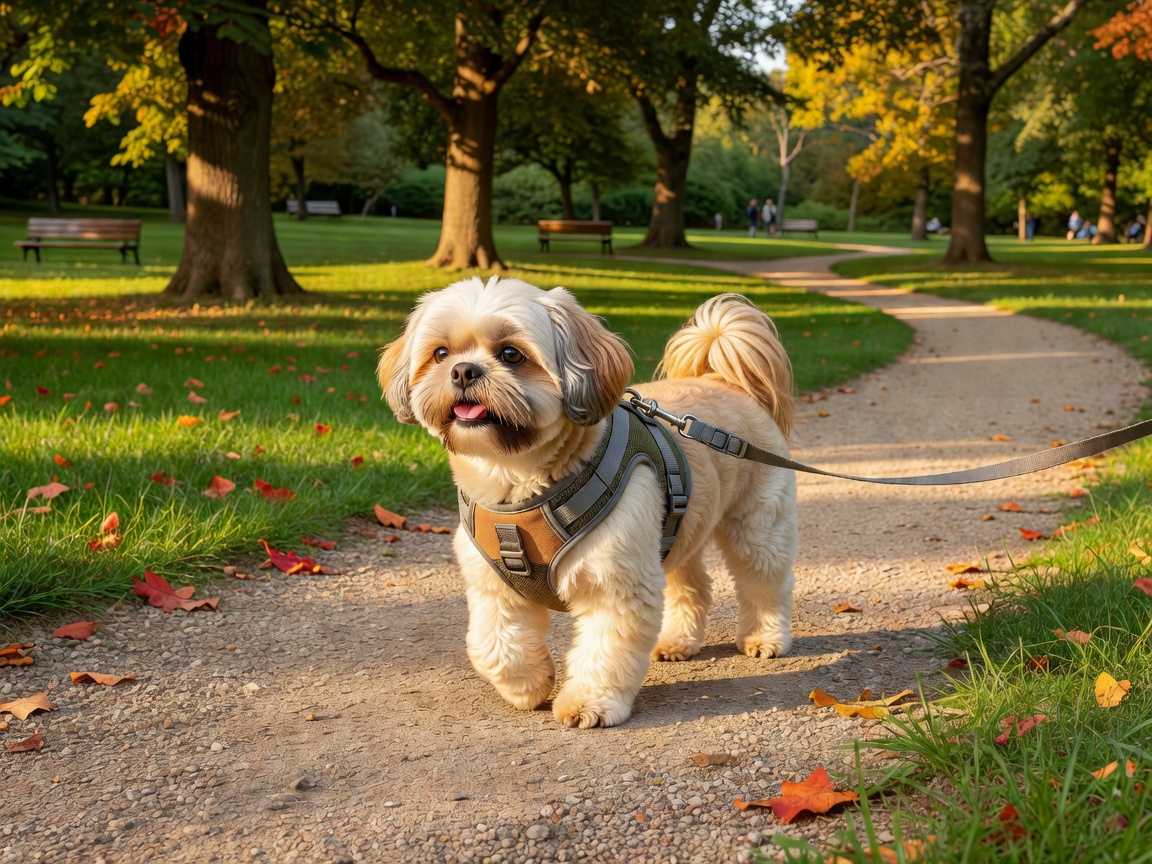
Toy breeds like the Shih Tzu possess delicate cartilaginous tracheas and broad, low chest structures. Attaching a leash directly to a neck collar can cause irreparable airway damage. Here is how to select a safe, comfortable walking harness.
The Hidden Danger of Neck Collars
When a dog wearing a standard neck collar pulls forward or reacts to a sudden noise, all force concentrates on the hyoid apparatus and tracheal rings. In Shih Tzus, who are already predisposed to tracheal collapse, this repetitive pressure leads to chronic coughing, wheezing, and respiratory inflammation. Collars should be used strictly for holding identification tags, never for leash attachment.
Key Features of an Ergonomic Y-Harness
When shopping for a walking harness for your Shih Tzu, look for these specific design elements:
- Y-Shaped Chest Plate: The straps should form a clear "Y" shape over the chest bone (sternum) rather than a horizontal "T" bar across the lower throat. This ensures full shoulder blade movement and zero throat contact.
- Padded Breathable Mesh: Soft, padded lining prevents friction chafing against long, fine fur, especially in underarm areas.
- Dual Attachment Rings: A back clip ring for daily leisurely walks and a front chest ring for gentle control if your dog tends to pull.
- Lightweight Hardware: Heavy metallic buckles drag down small dogs' backs; look for high-grade lightweight composite clips.
How to Achieve the Perfect Fit
Place two fingers flat between the harness strap and your dog's body. The harness should feel snug enough that it cannot slip over the head during a backward step, but loose enough to permit natural deep breaths without restricting rib cage expansion.
Post-Walk Grooming Check
After returning from a walk, always unclip the harness immediately and gently brush through the chest and armpit fur with a pin brush to remove any mild tangles created by movement friction.